

Project
OVERVIEW
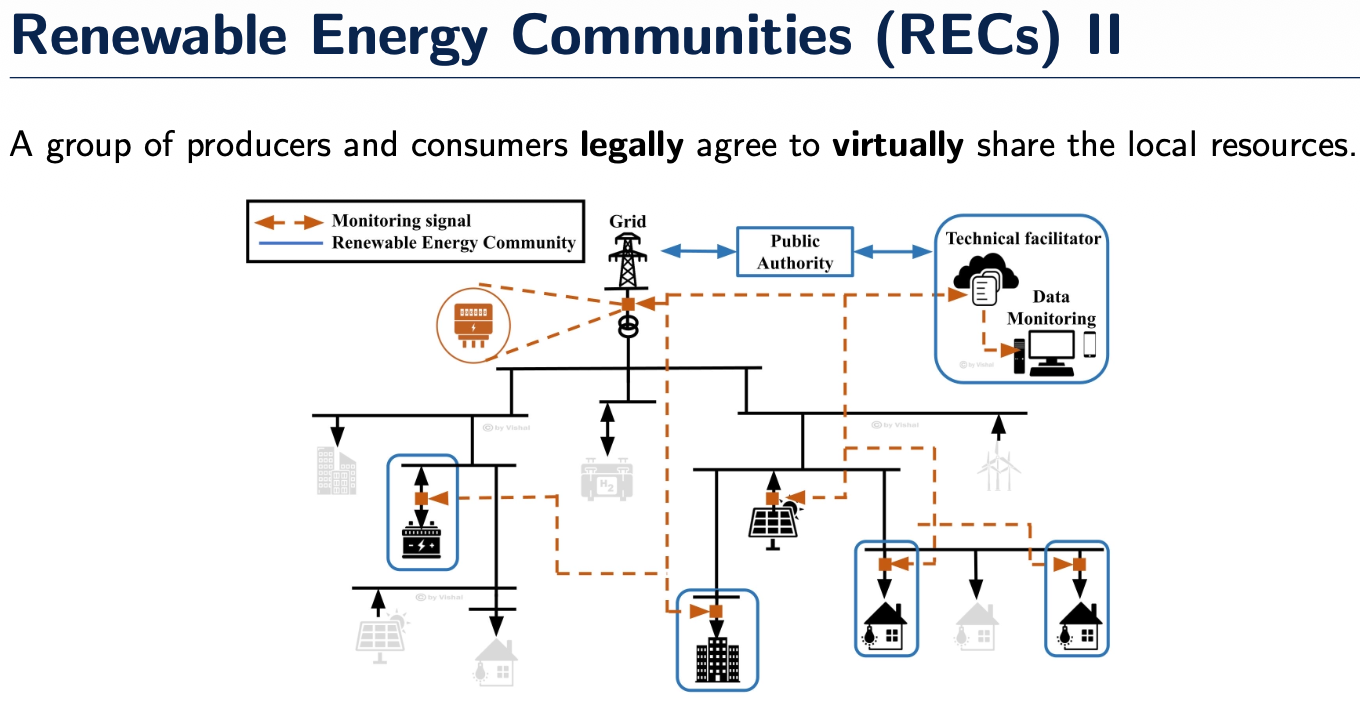
ECODREAM seeks to deliver innovative “ECo" solutions designed to harness the potential of Energy Communities (ECos), which are key to developing sustainable urban environments supported by flexible and stable smart energy grids. ECos are formed by proximate end-users, including public and private entities, having respective electrical and/or thermal energy demands, who enter mutually agreed, resource-sharing contracts, to pool and optimise use of their respective (individually/jointly-owned) distributed renewable energy generation and storage assets. In so doing, ECos effectively deliver potential environmental, social, and economic benefits - i.e. “triple bottom-line” benefits.
Reports
ECODREAM Final Project Report
|
ECODREAM was developed to deliver innovative “ECo" solutions designed to harness the potential of Energy Communities (ECos), which are key to developing sustainable urban environments supported by flexible and stable smart energy grids. ECos are formed by proximate end-users, including public and private entities, having respective electrical and/or thermal energy demands, who enter mutually agreed, resource-sharing contracts, to pool and optimise use of their respective (individually/jointly-owned) distributed renewable energy generation and storage assets. In so doing, ECos effectively deliver potential environmental, social, and economic benefits - i.e. “triple bottom-line” benefits. This report summarizes the implementation and results of the ECODREAM project, detailing the technical contributions, methodological advancements, and strategic outcomes achieved by the project partners: UNINA, UNIGE, and UNIBO. |
|
Publications
ECODREAM Project – Scientific Publications
Over the course of the project, all partner institutions effectively disseminated project outcomes and results through various journal publications and conference proceedings.
ECODREAM Project Results & Final Plenary Workshop - March 2026
ECODREAM Project Results & Final Plenary Workshop
Hosted at UNINA Federico II, Naples, Italy - 28 November 2025
The workshop showcased the results of the 2-year ECODREAM project presented by the lead investigators with their teams [UNINA/UNISAN, UNIBO, UNIGE], concluding with discussion and deliberation on potential future collaboration aimed at extending the work undertaken on renewable energy communities and the energy transition in general.
Complementary presentations on related regulatory developments/technical advancements were also delivered by guest speakers from industrial partner Friendly Power as well as from prominent colleagues from POLIMI and UNIPD - the latter universities were not directly involved in the PRIN project.
All presentations are available for download.
Announcement: ECODREAM Final Project Report & Plenary Workshop - 28 November 2025
Venue: UNINA Federico II, DIETI - Seminar Rm, Building 3, Via Claudio 21, Naples, Italy
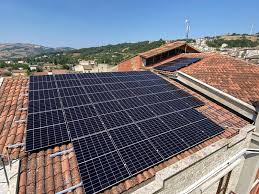
WORKSHOP OVERVIEW
The workshop will showcase the results of the 2-year ECODREAM project presented by the lead investigators and deliberate future activities. Complementary presentations on related developments/advancements will also be delivered by guest speakers from an industrial partner as well as from two other prominent Italian universities not directly involved in the PRIN project.
Virtual Participation: Open to students, researchers/academics, other stakeholders. MS Teams link.
Seminar: Learning MPC: a Data-efficient Model-based Reinforcement Learning Strategy for Iterative Tasks
Seminar Announcement

Ecodream Seminar Series Organised by Prof Luigi Glielmo
Learning MPC: a Data-efficient Model-based Reinforcement Learning Strategy for Iterative Tasks
Ugo Rosolia
Senior Research Scientist and Science Manager, Amazon
Date/Time: 29 May 2025 / 10:30 – 11:30 am CET
Venue: UNINA Federico II - DIETI, Room CL-I-3, Via Claudio 21, 80125 Naples, Italy
This presentation will first provide an overview of the theory of Learning Model Predictive Control, showing in particular, how to leverage data in the decision-making process while ensuring safety, exploration, and performance improvement. The second part of the presentation will show that the proposed methodology can be used to teach a full-size real-world autonomous vehicle how to race, and culminate in a discussion on preliminary work to extend this strategy to multi-agent racing.
Virtual Participation: Via Teams
Automatic Control in the Era of Artificial Intelligence - Seminar
Seminar Announcement
Seminar Organised by: Profs. Luigi Glielmo & Bruno Siciliano
Automatic Control in the Era of Artificial Intelligence
PROF. FRANCESCO BORRELLI, FANUC Chair in Mechanical Systems
Department of Mechanical Engineering, University of California, Berkeley
https://me.berkeley.edu/people/francesco-borrelli/
Monday, 24 March 2025, 09:00−10:00
Venue: UNINA Federico II - DIETI, Via Claudio, Bldg 1, Floor 2, Room lI.3, 80125 Naples, Italy
Virtual: MS Teams Online.
In an era where Artificial Intelligence (AI) is often seen as a universal solution for any complex problem, this presentation offers a critical examination of its role in the field of automatic control. It will focus on Optimal Control techniques, navigating through its history and addressing the evolution from its traditional model-based roots to the emerging data-driven methodologies empowered by AI.
Seminar: Optimisation-based Control of Flexible Resources in Sustainable Energy Networks
Seminar Announcement
Ecodream Seminar Series Organised by Prof Luigi Glielmo
Optimisation-based Control of Flexible Resources in Sustainable Energy Networks
Professor Alessandra Parisio
University of Manchester, Department of Electrical and Electronic Engineering (EEE)
Date/Time: 5 February 2025 / 12:00 – 13:00 am CET
Venue: Conference Room, Ist floor (ex Softel), Via Claudio 21, 80125 Naples, Italy
The growing deployment of distributed energy resources, while providing significant environmental and economic benefits, can induce reduced total system inertia and controllability, thus presenting new challenges in power grid operation. Within this context, flexibility (ability to adjust to time-varying grid conditions) is crucial for the transition towards power systems that can efficiently accommodate high shares of renewable energy sources. However, managing flexibility in urban districts and in distribution networks requires control and optimisation tools that are not yet available. This seminar will explore promising distributed control approaches for coordinating flexible resource, which leverage advanced methods, such as model predictive control and time-varying online optimisation, and data; moreover illustrative case studies will also be discussed.
Virtual Participation: Via Teams