



Energy Communities (ECos), characterized by end-users in close geographical proximity that have electrical and/or thermal demand, along with individual/shared renewable energy resources and storage technologies, efficiently integrate distributed energy resources by promoting ECo self-consumption. ECos can potentially offer i) environmental benefits in the form of reduced carbon footprint, ii) social benefit in terms of increased end-user participation, iii) economic benefits due to the reduction in distribution and transmission cost and grid losses. However, ensuring stable and reliable ECo operations (internal and external) calls for developing a synergic combination of ICT-integrated control and optimization algorithms that adhere to regulations, end-user preferences, ECo operational constraints and requirements related to external interactions.
To address these issues, ECODREAM’s objectives are threefold: (i) formalizing new models specific to the ECo design and functioning; (ii) designing distributed algorithms and software toolboxes capable of generating local-level control policies with global optimality and safety guarantees; and (iii) testing algorithm performance and scalability through extensive large-scale simulations and on a real ECo test-bed.
The novel ECo set up addressed in ECODREAM combines several challenges that in the literature have been only partially and separately addressed in the context of e.g., microgrids and/or power networks.
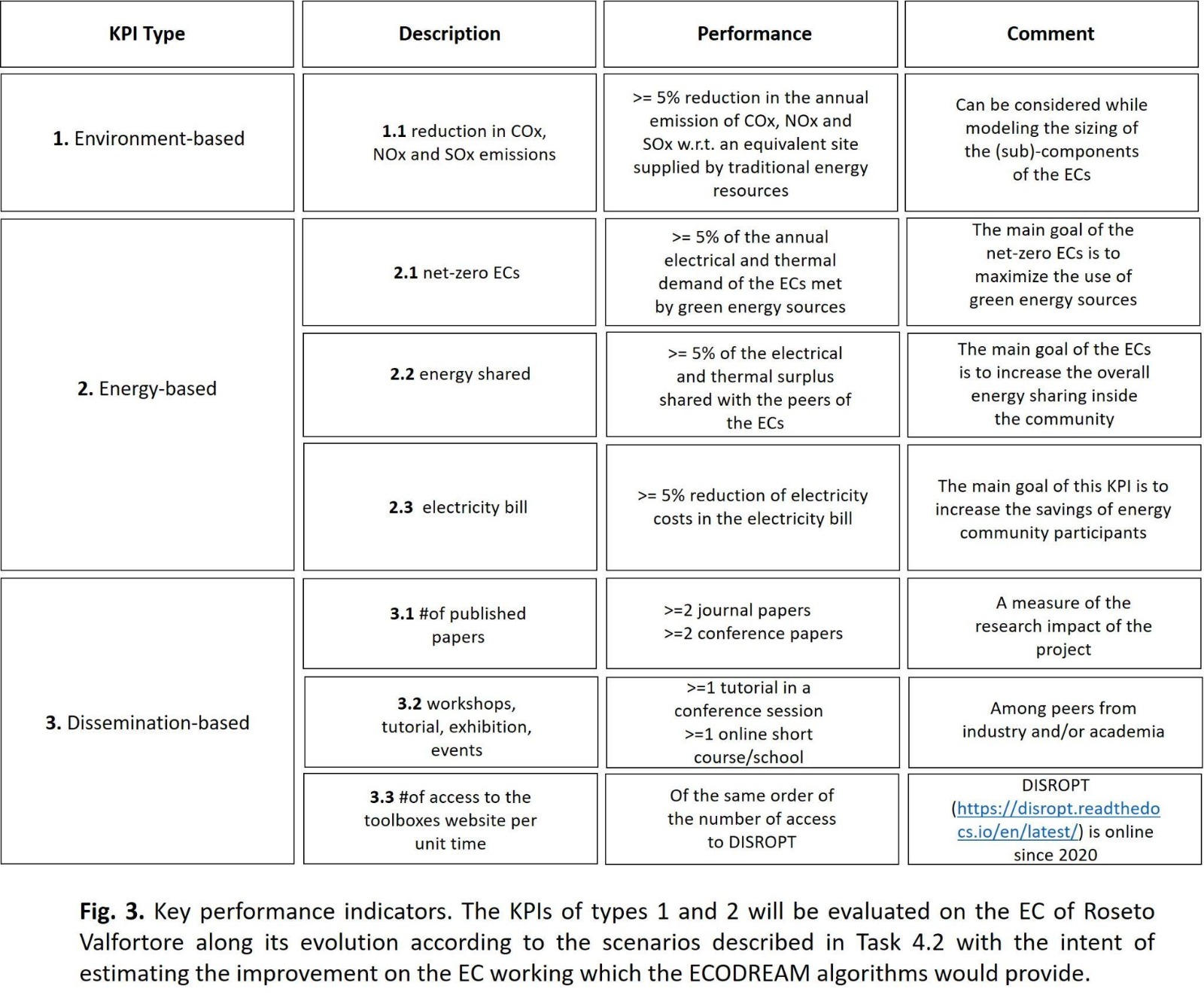
ECODREAM seeks to extend existing methods within the core expertise of the partners through fruitful innovation and collaboration, employing this consolidated knowledge to converge vertically on the ECo management application. The project algorithms will be benchmarked, both in simulation and on the test-bed, with the state of the art in terms of computational and control performance, over a range of key performance indicators (such as energy, environmental and economic performance).
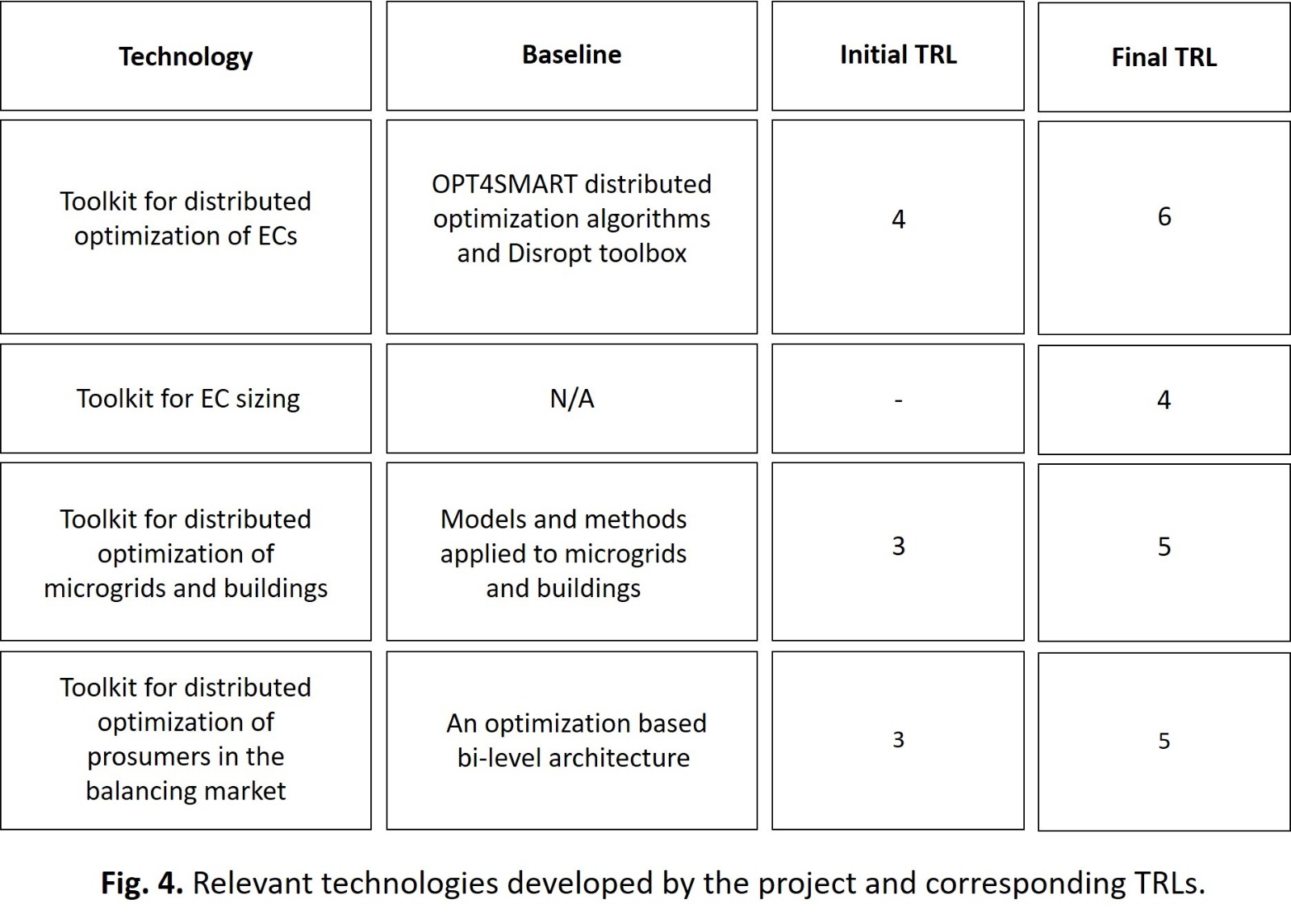
The project is organized into four work packages (WPs) and corresponding tasks, with success in achieving project goals measured through KPIs (Key Performance Indicators) as indicated in Fig. 3, and expected final TRLs (Technology Readiness Levels) for the technologies developed as indicated in Fig. 4, provided below.
WP1 - Project Management, Dissemination and Communication
WP2 - ECs Modeling
WP3 - Algorithms and Toolboxes for ECo Sizing and Operations
WP4 - Validation and Testing
PROJECT OVERVIEW
TARGETS: GOALS & OBJECTIVES
METHODOLOGIES
WORK PACKAGES
MILESTONES & DELIVERABLES